N NorthlineCoating

Powder coating built
for how your industry
actually abuses metal.

A coating that survives a warehouse shelf is not the same coating that survives an agricultural field, a food processing washdown, or a downtown facade. We spec and apply finishes against the specific abuse patterns of each sector we serve — and we've been doing it for two decades.

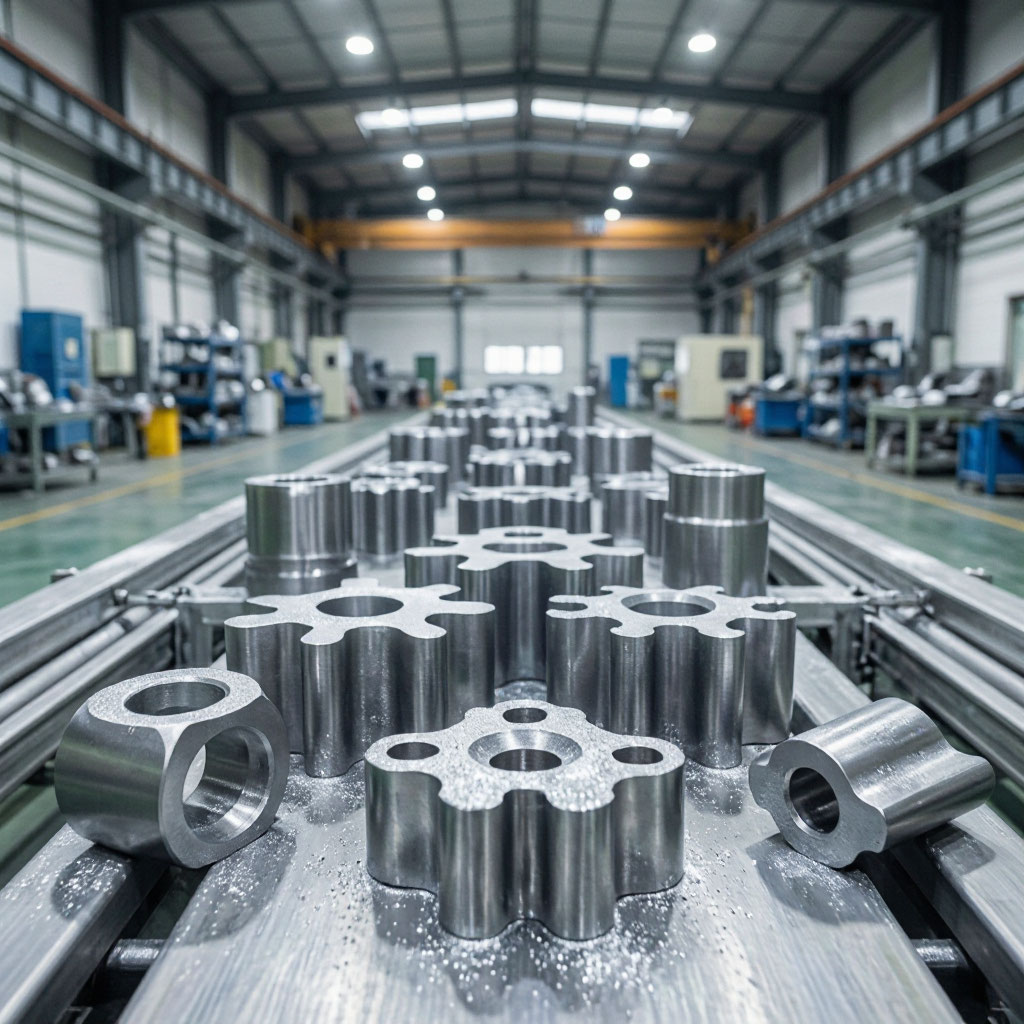
Industrial production floor with parts staged for powder coating
How we think about industries

The abuse pattern
comes first.

Every industry that coats metal has a specific set of things that kill finishes. Agriculture fights UV and fertilizer chemicals. Food processing fights caustic washdown chemicals and hot water. Construction fights weather, UV, and abrasion during handling and installation. Automotive fights brake dust, road salt, and thermal cycling. Each one requires a slightly different coating system even when the parts look similar on a drawing.

We've been coating parts for enough years to know what fails where. That knowledge is built into how we quote each job — not as an upsell, but as an honest recommendation about the system that will actually do what you need. If a cheaper system will get the job done, we'll say so. If a specific application needs a heavier build or a different chemistry, we'll say that too.

The sectors below represent the bulk of our production volume. If your industry isn't listed, it doesn't mean we can't help — it usually means the coating spec is more custom and worth a phone call.
01 Agriculture & Heavy Equipment

Equipment that lives outdoors, all year.

Agricultural parts are exposed to a combination that destroys most finishes: intense UV, fertilizer and diesel chemical exposure, mud and grit abrasion, and daily temperature swings from sub-zero mornings to hot afternoon sun. A coating on an implement has to hold up through years of this — because the frame isn't coming back to the shop for a redo.

Typical parts Implements, hitch assemblies, trailer frames, chassis, toolbars, seeding equipment
Recommended system TGIC polyester, 3–4 mil, over blasted and phosphated substrate
Why this system UV-stable, chip-resistant, holds color across years of direct sun. Available in standard ag colors (green, yellow, orange, red).
02 Construction & Structural Steel

Steel that gets installed and left alone.

Construction parts face a different set of problems than equipment. They're handled heavily before installation — dragged across a jobsite, bolted into place with impacts, and exposed to weather during the construction phase. Once installed, they're expected to hold up for decades with no maintenance. Coating these parts correctly means doing the prep work upfront, because there's no coming back.

Typical parts Connection hardware, base plates, brackets, embeds, decorative steel, railings
Recommended system TGIC polyester or hybrid, 3–5 mil, blasted and phosphated for exterior; epoxy for interior
Why this system Chip resistance for handling and installation, UV stability for exposed steel, chemical resistance where needed.
03 Automotive & Aftermarket

Parts that face brake dust, salt, and heat.

Automotive work is visible, functional, and unforgiving. A wheel that gets brake dust baked onto it every week has to clean up easily without losing gloss. A brake caliper that hits 800°F on a hard stop has to hold its finish. A suspension component has to survive rock chips at highway speed and road salt spread for months at a time.

Typical parts Wheels, brake calipers, chassis components, suspension arms, engine bay parts, restoration work
Recommended system TGIC polyester for wheels and chassis; high-temp specialty powder for brake calipers
Why this system Chip resistance, chemical resistance against brake dust, thermal stability on calipers, UV stability for wheels in daily service.
04 Furniture & Fixtures

Finishes people actually touch.

Furniture and commercial fixtures are handled constantly — chairs get dragged, tables get bumped, shelving gets loaded and unloaded. The finish is also visible and part of the design. We balance durability with appearance, choosing systems that hold up to daily use without looking like industrial equipment.

Typical parts Table bases, chair frames, shelving uprights, display brackets, retail fixtures, kiosk components
Recommended system Hybrid epoxy-polyester, 2–4 mil, in gloss, satin, or matte finishes
Why this system Good chemical resistance, better appearance retention than pure epoxy, wide color and gloss range for design-driven work.
05 Energy & Utility

Infrastructure that can't be serviced easily.

Energy and utility parts are often installed in locations that are hard or impossible to reach for maintenance — up a pole, inside an enclosure, on a remote substation. When a coating fails on these parts, the repair cost far exceeds the original finish cost. We spec these jobs with UV stability and long-term corrosion protection as the priority, even if it means a slightly higher upfront price.

Typical parts Transformer housings, pole-line hardware, enclosure components, mounting brackets, conduit supports
Recommended system TGIC polyester, 3–5 mil, or two-coat epoxy-primer / polyester-topcoat for coastal exposure
Why this system 20-year UV stability on topcoat, excellent corrosion resistance, resistant to temperature cycling and moisture.
06 Food Processing

Coatings that stand up to washdown chemicals.

Food processing facilities run caustic and acidic cleaning chemicals through their equipment on a daily basis. Coatings in these environments have to survive those chemicals, hot water, and frequent thermal cycling — all while meeting food-safety requirements around flaking and contamination. The spec for this work is different from anything else we run.

Typical parts Conveyor frames, brackets, motor mounts, enclosure panels, structural supports
Recommended system Heavy-build epoxy or two-coat system, 6–10 mil, blasted to near-white metal
Why this system Maximum chemical resistance against caustic and acidic sanitation chemicals, high film build for washdown abrasion.
07 Automation & Robotics

Precision parts that still get beat up.

Automation and robotics work involves tight-tolerance parts that get exposed to cutting fluids, hydraulic oil, and constant mechanical cycling. Coatings on these parts have to be precise about thickness and coverage on machined surfaces, while still resisting the chemical and mechanical abuse that machinery sees day in and day out.

Typical parts Machine bases, gantry frames, tooling plates, robot mounts, control enclosures, custom fixtures
Recommended system Epoxy or hybrid, 2–5 mil, with careful masking of precision surfaces
Why this system Chemical resistance against cutting fluids and coolants, controlled film thickness on tight-tolerance parts, clean masking of threaded and machined surfaces.
Cross-industry coating map

Which system fits
which sector.

Quick reference for how each industry maps to a coating chemistry. Detailed specs available on each service page.

Industry Primary chemistry Film build Service page
Agriculture TGIC Polyester 3 – 4 mil Industrial Coating
Construction TGIC Polyester / Hybrid 3 – 5 mil Industrial Coating
Automotive TGIC Polyester / High-Temp 2 – 6 mil Automotive Coating
Furniture Hybrid Epoxy-Polyester 2 – 4 mil Custom Coating
Energy & Utility TGIC Polyester 3 – 5 mil Industrial Coating
Food Processing Heavy-Build Epoxy 6 – 10 mil Industrial Coating
Automation Epoxy / Hybrid 2 – 5 mil Industrial Coating
Recent work

Three industries,
three projects.

Agriculture Lot 20,401

Implement frames for a regional ag manufacturer

Ongoing monthly production run of 340 frames in UV-stable polyester. Coated, tested, and shipped in five-day cycles to match the customer's assembly schedule.

Retail Fixtures Lot 20,435

Retail display brackets in brand teal

Four hundred steel brackets for a regional outdoor retailer, matched to their brand color from a physical chip. Held to ΔE ≤ 1.5 across two production lots.

Food Processing Lot 20,392

Conveyor frames for a Grand Rapids food plant

Heavy-build epoxy system at 8 mil over blasted steel. Two-coat application with full chemical-resistance documentation for the customer's internal QA file.

Industry FAQ

Questions across
the sectors.

My industry isn't listed. Can you still help?

Almost certainly. The list above covers our largest sectors, but we coat parts for plenty of smaller industries and one-off applications — mining, marine, defense-adjacent, architectural specialties, and others. If you send us a description of the part and what it's exposed to, we can usually recommend a coating system and quote it.

Do you handle mixed-industry orders in one batch?

Rarely. Different industries need different chemistries and different masking, and mixing them creates color-consistency and cross-contamination risks. We schedule by chemistry family, not by industry — so an agriculture job and an energy job in the same polyester color can run together, but an epoxy job and a polyester job will run separately.

How do you handle confidentiality for proprietary parts?

Standard practice for us. We don't photograph or reference customer parts in our portfolio or marketing without written permission. For defense-adjacent or IP-sensitive work, we can sign a mutual NDA before the RFQ, and we'll restrict access to the parts to a limited number of shop personnel.

Can you provide sample parts before we commit to a production run?

Yes. For any industry where the coating spec matters (which is most of them), we recommend a pilot lot of 3–10 representative parts before committing to full production. This lets us verify the system, catch any racking or masking issues, and get your sign-off on appearance before running the full quantity.

Do you offer recurring production scheduling?

Yes. For OEMs and manufacturers with recurring needs, we can hold a reserved production slot on a monthly, quarterly, or seasonal schedule. This guarantees capacity and lets us plan powder purchases in advance, which usually improves pricing on the recurring work.

What documentation do you provide with each shipment?

Standard documentation includes a certificate of conformance, film thickness report, powder batch reference, and cure log. For industry-specific requirements — defense, aerospace, medical, food processing — we can add additional documentation including chemical resistance test results, salt-spray hours, and per-lot traceability. Tell us what your QA file requires and we'll provide it.

Start your project

Tell us your industry.
We'll tell you the system.

Send us the part, the environment it lives in, and any spec you're working against. We'll recommend a specific coating system, quote it, and be honest about whether there's a better fit elsewhere.